We distribute the rushes from the film TERRA, directed by Michael Pitiot and Yann Arthus-Bertrand, aerial cinematography Bruno Cusa, original score by Armand Amar.
Pollution and the environment
Aerial and ground-level footage of the paradoxes of the modern world — rushes available for licensing
We produce the most beautiful images in the world — and sometimes the most disturbing. For thirty years, our cameras have documented the planet in all its diversity, and what they show is often an unbearable paradox : the same humanity capable of sculpting terraced rice fields of absolute beauty is also capable of turning entire bays into open-air landfills, blackening Arctic snow with foundry fumes, running supertankers aground on coral reefs.
These images are not comfortable. They are not made to decorate an office. They are made to be seen — in documentaries, news reports, awareness campaigns, institutional productions. They bear witness to a world in tension between its needs and its limits.
Norilsk — the city that poisons the snow — 300 kilometres north of the Arctic Circle, Norilsk is one of the most polluted cities on the planet. Its nickel, copper and palladium smelters — metals essential to our batteries and smartphones — belch sulphur dioxide fumes that blacken the snow and destroy vegetation for dozens of kilometres around. The paradox is total : Norilsk produces the materials of the "ecological transition" under catastrophic environmental conditions. Our footage of this closed city, obtained through exceptional authorisations, is among the rarest in our catalogue. See our dedicated article on Norilsk.
The landfills of Santo Domingo, Dominican Republic — Seen from the air, the outskirts of Santo Domingo reveal what the tourism of the north coast beaches carefully conceals : vast landfills where the waste of a city of three million inhabitants accumulates, worked by thousands of scavengers. The aerial image of a mountain of colourful rubbish in the middle of a Caribbean island is one of the most violent contrasts in our collection.
Cairo — brick kilns and the Nile Delta — In Egypt, the artisanal brick kilns on the outskirts of Cairo burn their furnaces on low-grade fuel oil, enveloping working-class neighbourhoods in a permanent cloud of black smoke. In the Nile Delta, our ground-level footage — shot from a travelling vehicle — shows the dirt and destitution of small towns and villages, a reality that aerial images of pyramids and temples never show.
Port-au-Prince — a city at breaking point — Port-au-Prince seen from the air is a lesson in humility for any urban planner. Cité Soleil, one of the most densely populated slums in the Caribbean, stretches across dozens of hectares without running water or sewers, its lanes too narrow for fire trucks, its corrugated iron rooftops heated white by the tropical sun. Pollution there is a condition of survival as much as a fatality.
The industrial port of Dunkirk — In France, the port of Dunkirk is the third-largest French port and one of the great industrial-port complexes of Northern Europe. Seen from the air, its metallurgical terminals, blast furnaces, oil depots and thermal power stations form an industrial landscape of striking visual power — beautiful and unsettling at once, like a monument to our dependence on fossil fuels.
Ship-breaking yards — Chittagong and Gadani — On the beaches of Chittagong in Bangladesh and Gadani in Pakistan, thousands of workers dismantle supertankers and container ships by hand under medieval safety conditions. The beaches are contaminated with hydrocarbons, asbestos and heavy metals. And yet these yards support hundreds of thousands of families. It is the most brutal paradox of globalisation — our old ships end their lives on the beaches of the poorest countries, under the most dangerous conditions. See our dedicated articles on Bangladesh and Pakistan.
The wreck of the Rena, New Zealand — In October 2011, the container ship MV Rena ran aground on the ?t?iti reef off Tauranga, spilling hundreds of tonnes of fuel oil into New Zealand waters. Our aerial footage of the vessel breaking apart on the reef — its bow raised skyward, its stern sunk in the water, containers scattered across the reef — is a rare document on one of the worst maritime environmental disasters in New Zealand's recent history.
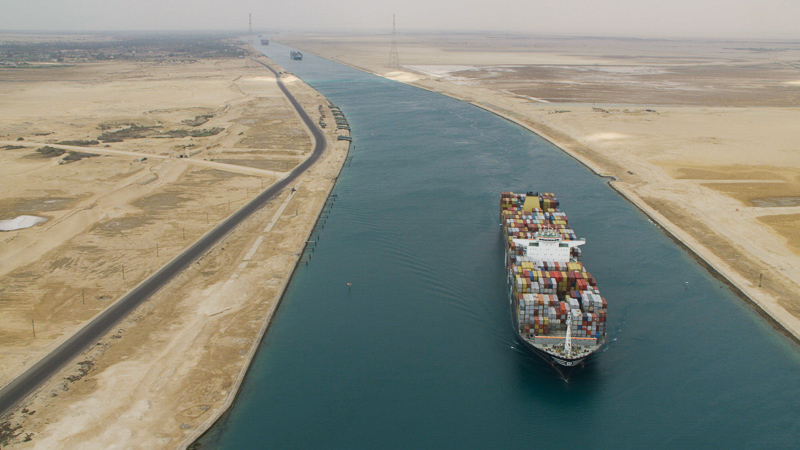
Globalisation from above — The port of Yangshan in Shanghai, its millions of colourful containers stacked as far as the eye can see, the convoys of supertankers in the Suez Canal, the industrial almond orchards of California irrigated by drip systems, the offshore wind farms of the North Sea — globalisation has its own landscapes, fascinating and vertiginous, unlike anything humanity had produced before the 20th century.
But also — protection and hope — Our collection is not limited to images of destruction. It also documents conservation efforts : the reintroduction of the jaguar in the Iberá reserve in Argentina, the helicopter translocation of rhinoceros in South Africa, sustainable fish farms in Norway and Korea. The aerial camera is a tool of testimony — for the prosecution and for the defence.