
Film using our footage produced in partnership with the Bangladeshi NGO Friendship during the COP21 in Paris
Rushes from the film produced in partnership with the Bangladeshi NGO Friendship
This film, produced in partnership with the Bangladeshi NGO Friendship and screened at COP21 in Paris, explores the challenges facing Bangladesh in the context of climate change. Narrated by Yann Arthus-Bertrand with contributions from NGO founder Runa Khan, it documents the floating hospitals of the association, the "chars" — sand islands sheltering populations from the river floods — river traffic in Dhaka, the small villages of the Sundarbans, and the vast ship-breaking yards of Chittagong.
Bangladesh occupies the flat, low-lying delta formed by the confluence of the Ganges and the Brahmaputra — known locally as the Jamuna once it crosses into Bangladeshi territory, while the Ganges becomes the Padma where the two rivers meet near Dhaka. The alluvial plains deposited by these rivers rank among the most fertile on earth.
Most of the country lies less than 12 metres above sea level, making it acutely vulnerable to flooding — a vulnerability compounded by climate change. Around 80% of annual rainfall falls during the five months of the monsoon season, from June to October, while only a fraction of the land is protected by flood defences and drainage infrastructure. Seen from the air, this relationship between Bangladesh and its waters is the defining reality of the country — a landscape in perpetual negotiation with the rivers that sustain and threaten it in equal measure.
Dhaka and its river traffic — Dhaka, one of the most densely populated cities on the planet, turns its back on no river. Seen from above, the waterways around the capital are in constant motion : ferries, cargo boats, wooden fishing vessels and makeshift craft of every kind crowd the channels in an organised chaos that reveals how fundamentally the city depends on its rivers for transport, trade and daily life. At peak hours, the river surface disappears beneath a mosaic of hulls — one of the most visually striking aerial sequences in our collection.
Agricultural work along the rivers — Along the banks of the Brahmaputra and its tributaries, our footage documents a form of farming found almost nowhere else : farmers ploughing the sand of freshly emerged river banks, working the alluvial deposits left by the retreating floods to plant their crops before the next inundation. A race against the river, captured from the air in images of rare documentary value.
The Chittagong ship-breaking yards — On the tidal flats south of Chittagong, one of the world's largest ship-breaking industries unfolds over several kilometres of coastline. Ocean-going vessels — supertankers, container ships, bulk carriers — are driven at full speed onto the beach at high tide and then dismantled piece by piece by thousands of workers using cutting torches and bare hands. Seen from the air, the scale of the operation is staggering : a procession of rusting hulls in various stages of deconstruction, surrounded by a labyrinth of scrap metal, cranes and makeshift workshops. It is one of the most extraordinary industrial landscapes in the world, and among the most dangerous working environments on the planet. These images echo our collection from the Gadani ship-breaking yards in Pakistan — two sites filmed from the air that together form a unique document on this vital and deeply controversial industry.
Ship Breaking Yard
Bangladesh Aerial Stock Footage
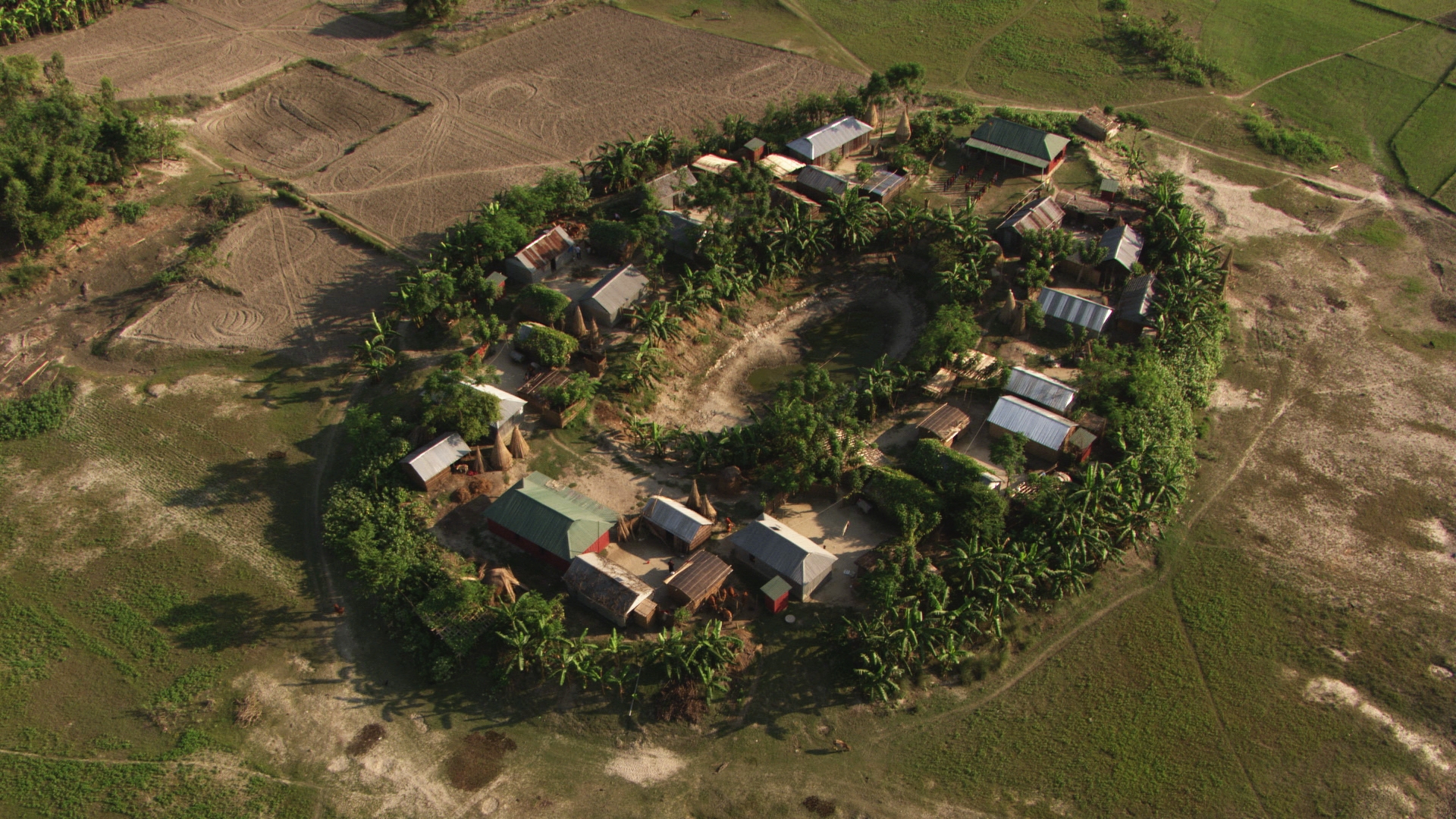
Film produced in partnership with the Bangladeshi NGO Friendship, screened at COP21 in Paris. Stabilised Cineflex camera — Papa Sierra — on a Bell 407 helicopter. Carbon emissions were offset as on all our shoots, an imperfect solution that increasingly leads us to favour local operators working with drones over long-haul helicopter deployments.
Film produced in partnership with the Bangladeshi NGO Friendship, screened at COP21 in Paris. Stabilised Cineflex camera — Papa Sierra — on a Bell 407 helicopter. Carbon emissions were offset as on all our shoots, an imperfect solution that increasingly leads us to favour local operators working with drones over long-haul helicopter deployments.