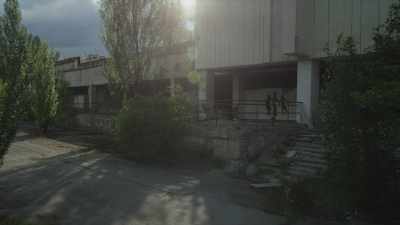
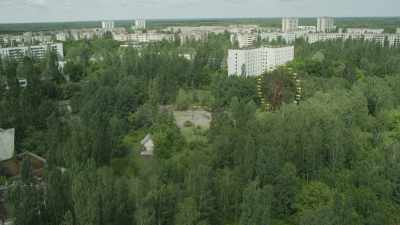
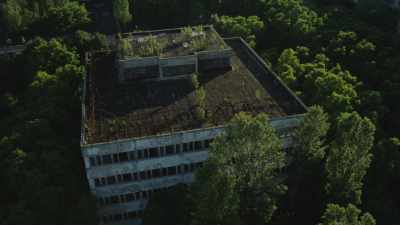
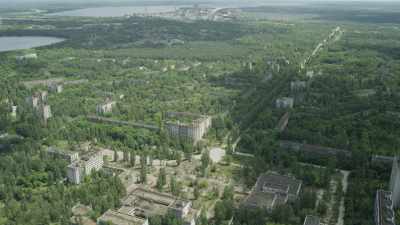
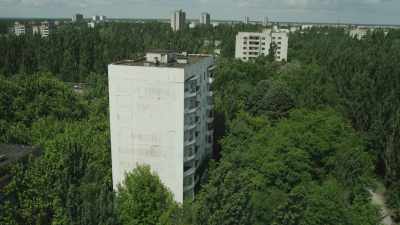
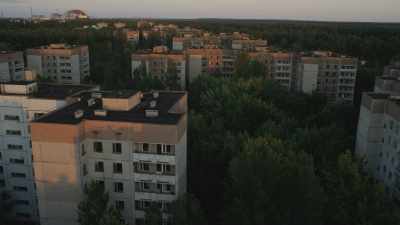
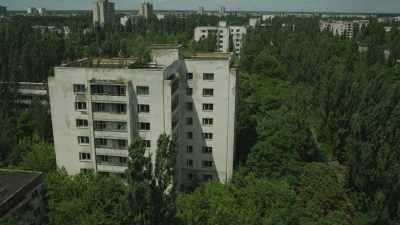
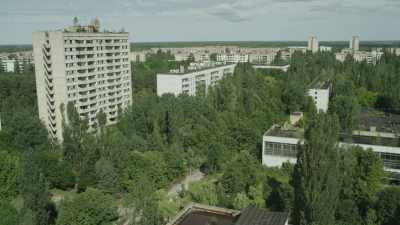
Named after the nearby Pripyat River, Pripyat was founded on 4 February 1970, as the ninth nuclear city (a type of closed city) in the Soviet Union, to serve the nearby Chernobyl Nuclear Power Plant. It was officially proclaimed a city in 1979, and had grown to a population of 50 000 by the time it was evacuated, on the afternoon of April 27, 1986, the day after the Chernobyl disaster.
30 years after, it has become a haven for wildlife - a nature reserve in all but name.
The exclusion zone around the Chernobyl nuclear power station is teeming with life.
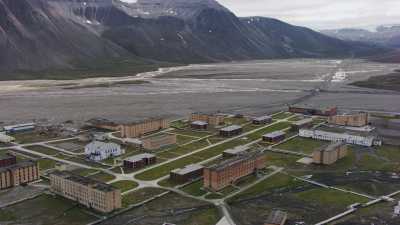
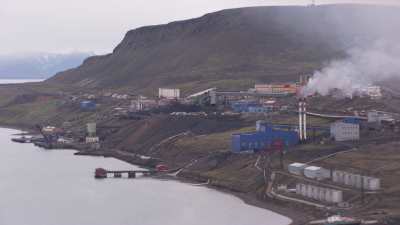
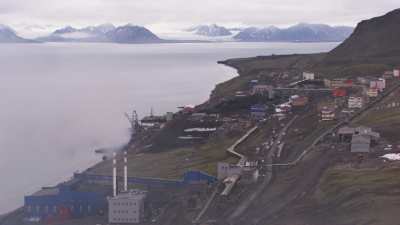
General view of mountains and mining area, and of abandoned city of Pyramiden. In the spring of 1998, the mine completely ceased to produce and the city was abandoned, only kept by 7 russian watchmen. It is now part of the ghost cities list of Spitzberg, as well as Grumantbyen, Colesbukta or Advent city.A bar stays open for the visiting tourists and in 2013 the former mining city's hotel re-opened its doors: Tulpan Hotel
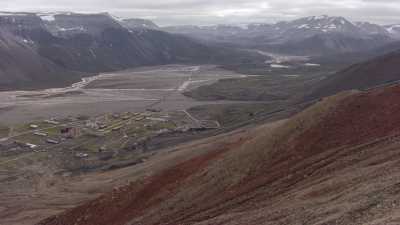
Former minig site in the mountains around Pyramiden. In the spring of 1998, the mine completely ceased to produce and the city was abandoned, only kept by 7 russian watchmen. It is now part of the ghost cities list of Spitzberg, as well as Grumantbyen, Colesbukta or Advent city.
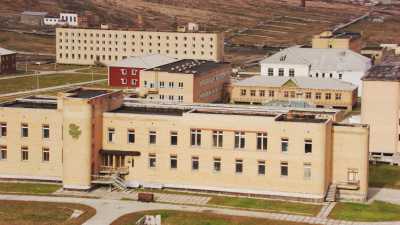
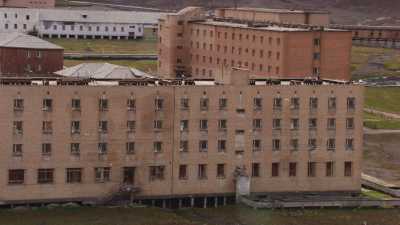
Close shots of Pyramiden abandoned buildings. In the spring of 1998, the mine completely ceased to produce and the city was abandoned, only kept by 7 russian watchmen. It is now part of the ghost cities list of Spitzberg, as well as Grumantbyen, Colesbukta or Advent city.A bar stays open for the visiting tourists and in 2013 the former mining city's hotel re-opened its doors: Tulpan Hotel
Close shots of abandoned buildings of Pyramiden, surrounded by flying seagulls. In the spring of 1998, the mine completely ceased to produce and the city was abandoned, only kept by 7 russian watchmen. It is now part of the ghost cities list of Spitzberg, as well as Grumantbyen, Colesbukta or Advent city.A bar stays open for the visiting tourists and in 2013 the former mining city's hotel re-opened its doors: Tulpan Hotel
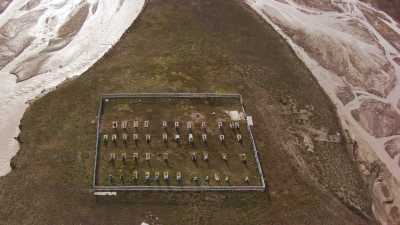
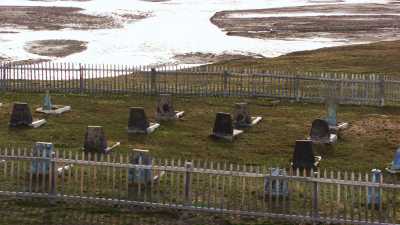
Pyramiden abandoned cemetery. In the spring of 1998, the mine completely ceased to produce and the city was abandoned, only kept by 7 russian watchmen. It is now part of the ghost cities list of Spitzberg, as well as Grumantbyen, Colesbukta or Advent city.A bar stays open for the visiting tourists and in 2013 the former mining city's hotel re-opened its doors: Tulpan Hotel
Pyramiden abandoned cemetery.In the spring of 1998, the mine completely ceased to produce and the city was abandoned, only kept by 7 russian watchmen. It is now part of the ghost cities list of Spitzberg, as well as Grumantbyen, Colesbukta or Advent city.