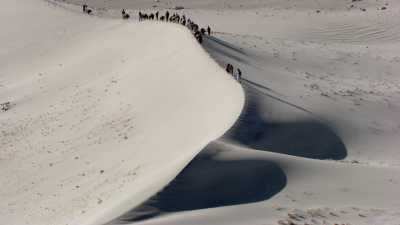
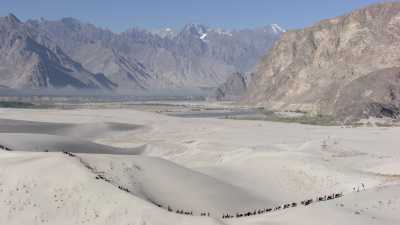
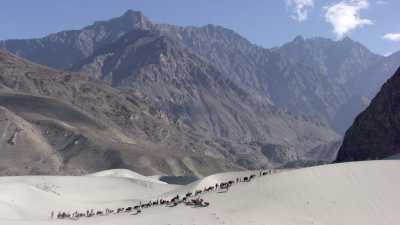
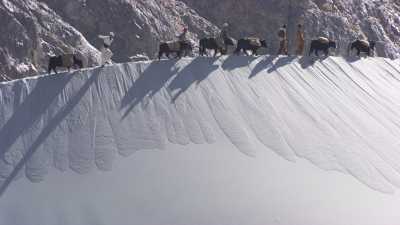
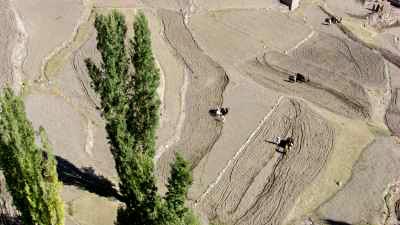
Yaks caravan in the dunes close to Skardu, in the Indus Valley, Pakistan. These long caravans allow transport of numerous food products in the remotest parts of the Himalayas.
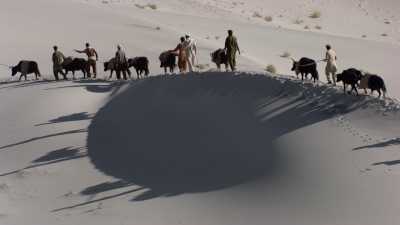
Yaks caravan in the dunes close to Skardu, in the Indus Valley, Pakistan. These long caravans allow transport of numerous food products in the remotest parts of the Himalayas.
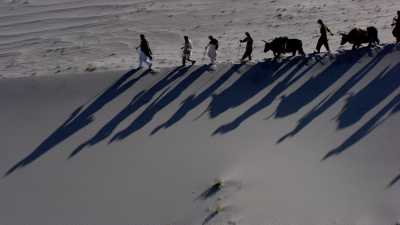
Yaks caravan in the dunes close to Skardu, in the Indus Valley, Pakistan. These long caravans allow transport of numerous food products in the remotest parts of the Himalayas.
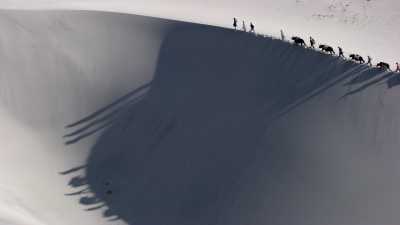
Yaks caravan in the dunes close to Skardu, in the Indus Valley, Pakistan. These long caravans allow transport of numerous food products in the remotest parts of the Himalayas.
Yaks caravan in the dunes close to Skardu, in the Indus Valley, Pakistan. These long caravans allow transport of numerous food products in the remotest parts of the Himalayas.
Yaks caravan in the dunes close to Skardu, in the Indus Valley, Pakistan. These long caravans allow transport of numerous food products in the remotest parts of the Himalayas.
Yaks caravan in the dunes close to Skardu, in the Indus Valley, Pakistan. These long caravans allow transport of numerous food products in the remotest parts of the Himalayas.
Yaks caravan in the dunes close to Skardu, in the Indus Valley, Pakistan. These long caravans allow transport of numerous food products in the remotest parts of the Himalayas.
The Pakistan Monument is a national monument and heritage museum located on the Shakarparian Hills in Islamabad, Pakistan, aimed to symbolise national unity. The complex covers an area of 2.8 hectares and is a popular picnic destination.
The monument is shaped as a blooming flower petal-shaped structure with the inner walls of the petals inscribed with the outlines of Lahore Fort, Badshahi Mosque, Khyber Pass and Minar-e-Pakistan. The monument opens onto a marble terrace providing a bird's-eye view of Islamabad City. The four main petals of the monument represent the four provinces (Balochistan, Khyber-Pakhtunkhwa, Punjab, and Sindh), while the three smaller petals represent the three territories (Gilgit-Baltistan, Azad Kashmir and the Tribal Areas).
The adjoining Pakistan Monument Museum includes a wax museum depicting important events leading to the Pakistan Movement. Furthermore, the facilities includes a reference library, audio-visual archive, conference hall along with a 62-seat capacity auditorium known as Panorama Hall. The complex receives on average received 1500 tourists per day totalling at 0.57 million visitors in 2015. From the air, the monument looks like a star and a crescent moon (formed by walls forming the petals), representing the star and crescent on Pakistan's flag.
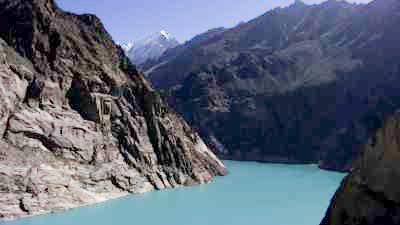
Satpara Lake is a natural lake near Skardu, Gilgit-Baltistan, Pakistan, which supplies water to Skardu Valley. It is fed by the Satpara Stream.
Satpara Lake is situated at an elevation of 2,636 meters (8,650 ft) above sea level and is spread over an area of 2.5 km².
The completion of Satpara Dam downstream of the lake has enlarged the size of Satpara Lake.
A local tale says thar the lake shines thanks to a gold mine lying deep in its waters.
In the heart of the Hunza Valley, Baltit Fort is an ancient fort in the Hunza valley in Gilgit-Baltistan, Pakistan. Founded in the 8th CE, it has been on the UNESCO World Heritage Tentative list since 2004.
In the past, the survival of the feudal regime of Hunza was ensured by the impressive fort, which overlooks Karimabad. The foundations of the fort date back to 700 years ago, with rebuilds and alterations over the centuries. In the 16th century the local prince married a princess from Baltistan who brought master Balti craftsmen to renovate the building as part of her dowry.
The Mirs of Hunza abandoned the fort in 1945, and moved to a new palace down the hill. The fort started to decay which caused concern that it might possibly fall into ruin. Following a survey by the Royal Geographical Society of London a restoration programme was initiated and supported by the Aga Khan Trust for Culture Historic Cities Support Programme. The programme was completed in 1996 and the fort is now a museum run by the Baltit Heritage Trust
In the heart of the Hunza Valley, Altit Fort is an ancient fort at Altit town in the Hunza valley in Gilgit Baltistan, Pakistan. It was originally home to the hereditary rulers of the Hunza state who carried the title Mir, although they moved to the somewhat younger Baltit fort nearby three centuries later. Altit Fort and in particular the Shikari tower is around 1100 years old, which makes it the oldest monument in the Gilgit–Baltistan.
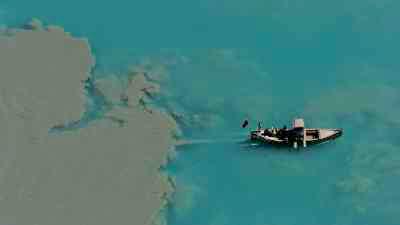
The Attabad lake was formed in 2010, due to a massive landslide at Attabad village in Gojal Valley in Gilgit-Baltistan, 9 miles upstream of Karimabad. The landslide killed twenty people and blocked the flow of the Hunza River for five months. The lake flooding has displaced 6,000 people from upstream villages, stranded (from land transportation routes) a further 25,000, and inundated over 12 miles of the Karakoram Highway.
The Attabad lake was formed in 2010, due to a massive landslide at Attabad village in Gojal Valley in Gilgit-Baltistan, 9 miles upstream of Karimabad. The landslide killed twenty people and blocked the flow of the Hunza River for five months. The lake flooding has displaced 6,000 people from upstream villages, stranded (from land transportation routes) a further 25,000, and inundated over 12 miles of the Karakoram Highway.
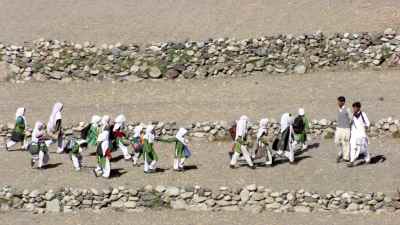
Pakistani schoolgirls are walking to school.
Girls in Pakistan face unique challenges and disadvantages. Two-thirds of Pakistan’s out of school children are girls, amounting to over 3 million girls out of school. However, too often we portray girls without power and no opportunities to prosper in society. When they can, young girls in rural areas are countering this notion through access to education.
Just as Malala Yousafzai, students and often girls keep on being attacked by terrorists just for wanting to go to school. Malala was awarded the Nobel Peace Prize for her tireless advocacy for children and girls rights for education. Above all, she is one of Pakistan’s youth. She represents the passions and enthusiasm many young Pakistanis have.